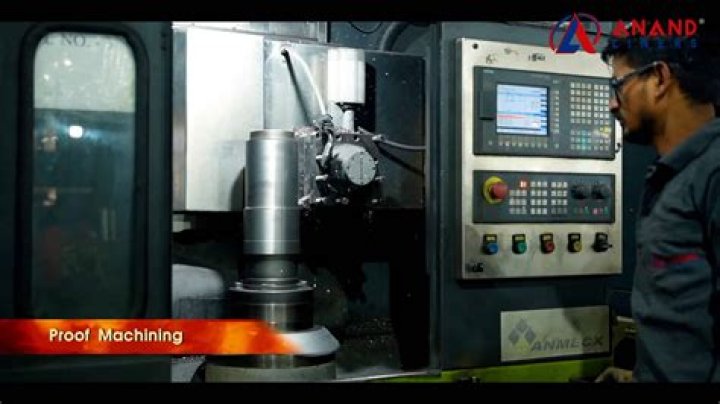
The three principal machining processes are classified as turning, drilling and milling. Other operations falling into miscellaneous categories include shaping, planing, boring, broaching and sawing.
What is machining used for?
Machining is the process used to remove material, typically metal, to create parts for machines, tools, transportation, and more. Machine shops and machinists use equipment like lathes, mills, and drill presses to turn material into useful tools using precise cuts.
What is mechanical machining?
Mechanical machining is the most reliable manufacturing method to fabricate precise and holistic metal parts. With a computer numerical controlled (CNC) machine tool, the µm level form accuracy and surface roughness could be achieved with ease.
What are the disadvantages of machining?
The limitations of machining process are as follows.
The accuracy of the components produce is dependent on the efficiency of the operator. Consistency in manufacturing is not present. Hence 100% inspection of the component is required. The personal needs of the operator are reducing the production rates.
What are the 7 basic types of machine tools?
They retain the basic characteristics of their 19th- and early 20th-century ancestors and are still classed as one of the following: (1) turning machines (lathes and boring mills), (2) shapers and planers, (3) drilling machines, (4) milling machines, (5) grinding machines, (6) power saws, and (7) presses.
What are the 4 types of manufacturing processes?
The four main types of manufacturing are casting and molding, machining, joining, and shearing and forming.
What is manufacturing machining?
Machining is a prototyping and manufacturing process that creates a desired shape by removing unwanted material from a larger piece of material. Since a part is built by taking away material, this process is also known as subtractive manufacturing.
What can be machined?
Almost every material can be CNC machined. The most common examples include metals (aluminum and steel alloys, brass etc) and plastics (ABS, Delrin, Nylon etc). Foam, composites and wood can also be machined.
What is machining and types?
Machining operations are classified into 3 principle processes and they are turning, drilling and milling. There are other operations too that fall in miscellaneous categories such as boring, sawing, shaping, and broaching. A specific machine tool is required for taking care of each machining operation.
What is milling in manufacturing?
The machining process of using rotary cutters to remove material from a workpiece by advancing or feeding in a direction at an angle with the axis of the tool. Milling processes are operations in which the cutting tool rotates to bring cutting edges to bear against the workpiece.
What is conventional machining?
What is Conventional Machining? The conventional machining process uses a human operator to direct and control machining tools such as milling, boring, and drilling machines as well as lathes and other sharp cutting tools.
What are examples of machinery?
Machinery is defined as a mechanical device or the parts that keep something working. An example of machinery is a car’s engine. An example of machinery are the people who work for a political party; the machinery of the Republican Party. Machines or machine parts considered as a group.
What is unconventional machining?
Unconventional manufacturing processes is defined as a group of processes that remove excess material by various techniques involving mechanical, thermal, electrical or chemical energy or combinations of these energies but do not use a sharp cutting tools as it needs to be used for traditional manufacturing processes.
What are advantages of machines?
Some advantages:
Efficiency – Machines generate more production with minor energy and within a limited time. Worker might be more dedicated to their work when they make use of machines. Improvement in the quality and quantity of products, as a machine, ensure high and large production rate.
What is machining allowance?
In engineering and machining, an allowance is a planned deviation between an exact dimension and a nominal or theoretical dimension, or between an intermediate-stage dimension and an intended final dimension.
What are machining machines called?
1. Turning. A turning machine, or lathe, removes material by rotating the workpiece at a high RPM while a stationary single-point cutting tool shaves into it to create the desired, which is typically round, tubular, or cylindrical in shape.
What are the 4 classification of tools?
Categories of hand tools include wrenches, pliers, cutters, files, striking tools, struck or hammered tools, screwdrivers, vises, clamps, snips, saws, drills and knives. Outdoor tools such as garden forks, pruning shears, and rakes are additional forms of hand tools. Portable power tools are not hand tools.
How many types of lathe machines are there?
Lathes can be roughly divided into three types, engine lathes, turret lathes, and special lathes. The basic engine lathe is used for most lathes, with the smaller bench or portable machines, or larger vertical tables standing on the floor.